“Better regulation”
The European Commission (EC) long ago set the rules of the game for itself when it comes to creating new regulations or amending existing ones. Through the so-called mechanism “better regulation”or better regulation, the EC should design simpler, clearer and more transparent rules as a key factor in making Europe more competitive.
To achieve this objective, the EC has set up a platform system in the form of collecting opinions and proposals from all stakeholders — citizens, businesses and everyone else — from the first conceptual stage of drafting a new regulation, to the preparation of detailed analyses and impact assessments and subsequent public consultations.
In short, it is a long process that emphasizes transparency, openness and the involvement of all interested individuals or organisations in the legislative process. The duration of the whole process to arrive at the new European regulations is counted in months and years rather than weeks.
It is interesting to note that the EC received 879 opinions and suggestionson the proposal to introduce the so-called 28th regime or to establish harmonised rules for a single European economic society, demonstrating that inclusion and the possibility of co-formulating rules in the EU is important for many individuals and organisations.
Anyone who wants to know more about this, I invite you to follow the site “Tell your opinion” (orig. Have your say).
Omnibus
Encouraged by the publication of today already famous and well known to many Draghi's reportBut last year, the Commission took a different path. This document clearly highlighted the key challenges for Europe to become more competitive in today's rapidly changing global economy.
Among other things, he states that
“As many as 60% of businesses in the EU see the regulatory framework as a barrier to investment, with 55% of SMEs citing regulatory barriers and administrative burdens as a major challenge.”1
The report further highlights
“Regulatory barriers to expansion are particularly burdensome in the technology sector, especially for young companies.”
which, of course, is true. In particular, Mario Draghi's report highlights the need to simplify the European regulatory framework, while at the same time providing a uniform methodology within the EU for assessing the effects and costs of new regulations.
The EC has therefore decided to take a new approach to changing the legal rules of the game, through the adoption of so-called omnibuses — a single legal act that modifies several individual, separate EU legal acts for a specific area, all with the aim of regulatory simplifications. We often hear, but also feel, the re-regulation of the EU. For example, investment simplification packages have already been adopted last year, and in the area of sustainability (text adopted amending the CSRD and CSDDD Directives), a third package including measures for SMEs and removal of documentation requirements (partially adopted)).
________________
1The report of M. Draghi, pp. 20, 32, 68-69
New package for digitalisation and artificial intelligence
As already mentioned, the adoption of EU legislation is based on the principles of open dialogue, public consultations, impact assessments, coordination and negotiations between the EC, the European Parliament and the EU Council — in short, endless hours, days, weeks, months to arrive at new European rules.
The basic rules were set by the EC itself, in the form of Better Regulation. Which are respected as long as it is reasonable and appropriate. But there are also exceptions. And it is precisely these exceptions that have been increasingly prevalent since the beginning of the mandate of this EC. The reason lies in the now famous Draghi report and a clear message: The EU needs to deregulate, become more agile, responsive and less bureaucratic, and reduce barriers for many businesses.
Thus, in the last year we have been faced with the production of so-called omnibus packages, when several sectoral rules/acquis of the EU are amended by a single act. If this seems opportune and the only correct way to explain that it goes so fast, then this is not true of the second part of the Olympic saying — higher and stronger (better).
There are currently two omnibuses on the table in the EU, which are important in terms of content, omnibus for AI rulesin digital omnibus.
Omnibus — simplifications or even more legal confusion?
In STF, as an important expert interlocutor, we were invited to participate in the preparation of the draft position of Slovenia on the two proposed omnibuses.
There is little time for analysis, for mutual consultation too, but when a person finds out the content, purpose and dimensions of the proposed changes, other alarms turn on.
Admission is expected in a few months, EU member states have to form official positions within a few weeks - this is a real sprint.
We appreciate the efforts of all participants in this debate (ministries and other regulators in Slovenia), who responded and included representatives of the economy and civil society in the preparation of the position of the Republic of Slovenia, which is commendable. But we can not get rid of the feeling of anxiety about the lightness of some Proposed changes2which, we can say, fundamentally change the rules of the game.
Therefore, in the STF we did not even give our opinion on certain amendments, as we consider it important to draw attention primarily to this questionable practice of the EC, when it itself bypasses its own rules to draw up a new and or modify the existing regulatory framework.
________________
2Digital Omnibus — e.g. proposed merger of data rules from the current four EU legislative acts into an amended Data Regulation (EU) 2023/2854 or a Single Data Act; changes to the definitions in Regulation 2022/868 on European data governance, also relating to the processing of sensitive data; inclusion of the Directive on of data in the Data Act; the definition (concept) of personal data as known by the GDPR changes; new definition of the purpose for the processing of personal data for scientific purposes.
Other responses
That we are not the only ones in such reflections, I highlight the opinion of the Brussels think-tank BruegelA reputable and influential online media Politicianin SOAPEuropean Association of Experts in the Field of Public Policy.
But the most important thing is Report of the European Ombudsmanwhich notes a number of procedural irregularities in the way in which the Commission has drawn up a number of legislative proposals which it considered to be urgent.
And when you find out that all omnibuses are supposed to be 42, you wonder how we're all going to end up in this legal maze in the first place. How will legal certainty be guaranteed to all entities? How will we be able to assess potential regulatory and business risks in companies and adequately protect our business/operations?
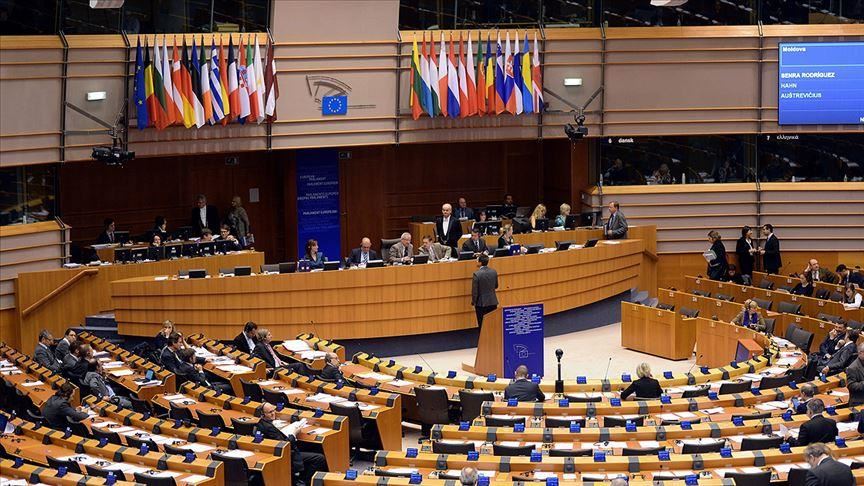
Omnibus — is it really a simplification or even more legal confusion?
The question therefore arises as to whether these are really simplifications that will make our work and development easier for all of us and lower costs, or whether we are going to be caught between a legally vague text and articles and paragraphs of these and those directives and regulations.
So the question — real simplifications or even more confusion — is spot on, at least for now.
AUTHOR: Barbara Krajnc, Director of the Slovenian Technology Forum, GIZ
.png)