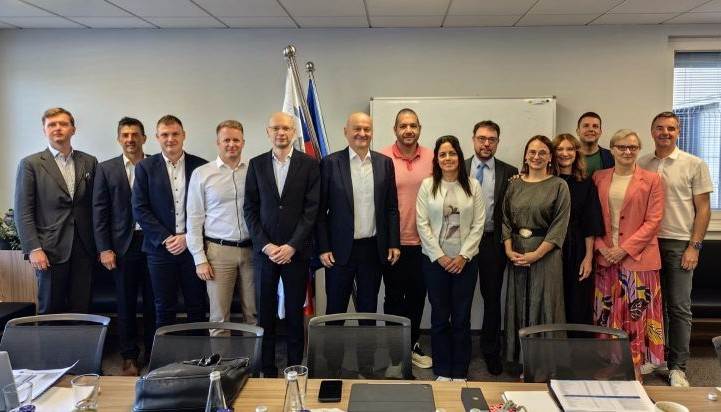
The main speakers at the conference were Major General Dobran Božič, an adviser to the Minister of Defence, and representatives from the business sector and critical infrastructure, including Gregor Spagnolo (SSRD), Andraž Logar (3fs), Damjan Matičič (Koofr), Mag. Melita Šinkovec (Government Information Security Office of the Republic of Slovenia), Mateja Rokvič (Ministry of Defence), Igor Josipović (Institute of Oncology), and Mag. Bojan Muršec (Supreme Court of the Republic of Slovenia).
Threats are no longer remote
As the speakers pointed out, Europe is no longer an oasis of peace and stability. Conflicts are increasingly migrating into the information and cyber domains, where the region remains vulnerable due to the lack of a unified defense capability. Slovenia is particularly vulnerable - not because of a lack of expertise, but because of the fragmentation of the system.
”Cybersecurity is no longer just a technical issue, but a strategic necessity.The participants agreed: the resilience of a digital society is directly linked to national security, economic sovereignty, and public trust.
Slovenia's Weaknesses and Opportunities
Among the biggest risks, they highlighted critical infrastructure ranging from energy and healthcare to transport. Threats are not limited to computer systems; they also target the fabric of society, from disinformation to the erosion of public trust.
Slovenia can boast of top-tier experts, but it still lacks a unified system and a national cybersecurity center. According to the participants, the state and enterprises should develop domestic solutions, invest in long-term resilience, and treat cybersecurity as a strategic investment rather than a cost.
The greatest vulnerability: people
Much of the discussion was also devoted to the human factor. Company managers often view security as an unnecessary expense, and employees are not sufficiently aware of the risks. For this reason, a comprehensive educational strategy and a shift in leadership culture are essential.
Open questions for the future
The STF consultation raised a number of important questions:
- How can we convince business leaders that cybersecurity is a long-term investment?
- Who will hold primary responsibility in the event of a systemic infrastructure outage?
- How can we connect dispersed professionals and institutions into an effective system?
- How should the state support a company that develops cyber solutions and targets the international market? How can we design a national champion?
Shop
The consultation was a clear reminder that passivity is no longer an option. Slovenia needs to put cyber resilience at the heart of its national strategy if it is to maintain security, sovereignty, and stability at a time when threats are shifting from the physical to the digital world.
The next steps require decisive political, economic, and professional shifts. Without unified coordination, investment in domestic expertise, and systematic awareness across society, we will remain vulnerable. We need a national agreement that transcends election cycles and narrow interests to establish a long-term vision. Slovenia can become a model of best practice-but only if it promptly integrates its dispersed capacities into a common strategy that protects our sovereignty, economy, and trust in institutions.